Home / Behavior Modification
Specialized Intervention Program

BEHAVIOR MODIFI- CATION

Aggression. Reactivity. Anxiety. Fear. These aren't character flaws — they're communication failures. We fix the root, not the symptom.

4th Gen Dogman
100% Case-by-Case
Root Cause Focus
Scroll
LEASH REACTIVITY HUMAN AGGRESSION DOG AGGRESSION SEPARATION ANXIETY RESOURCE GUARDING FEAR & PHOBIAS COMPULSIVE BEHAVIOR LEASH REACTIVITY HUMAN AGGRESSION DOG AGGRESSION SEPARATION ANXIETY RESOURCE GUARDING FEAR & PHOBIAS COMPULSIVE BEHAVIOR

This Is Not Standard Obedience Training

Behavior modification is a different discipline entirely. Where obedience training teaches a dog what to do, behavior modification changes why they do it — the underlying emotional state and conditioned responses driving dangerous or disruptive behavior.

Every case starts with a thorough behavioral assessment. We identify the trigger, the threshold, the history, and the intensity. Then we build a structured protocol — specific to your dog — designed to systematically reduce the unwanted response and replace it with a stable, manageable alternative.

This work is serious, not instant. It requires skilled handling, consistent owner follow-through, and realistic expectations. If you're ready for all three, we can change what feels like an impossible situation.

Before You Reach Out

If your dog has bitten a person or another animal, please disclose this immediately in your inquiry. We do not refuse cases based on bite history — but we need full transparency to assess risk appropriately and structure the program safely for everyone involved.
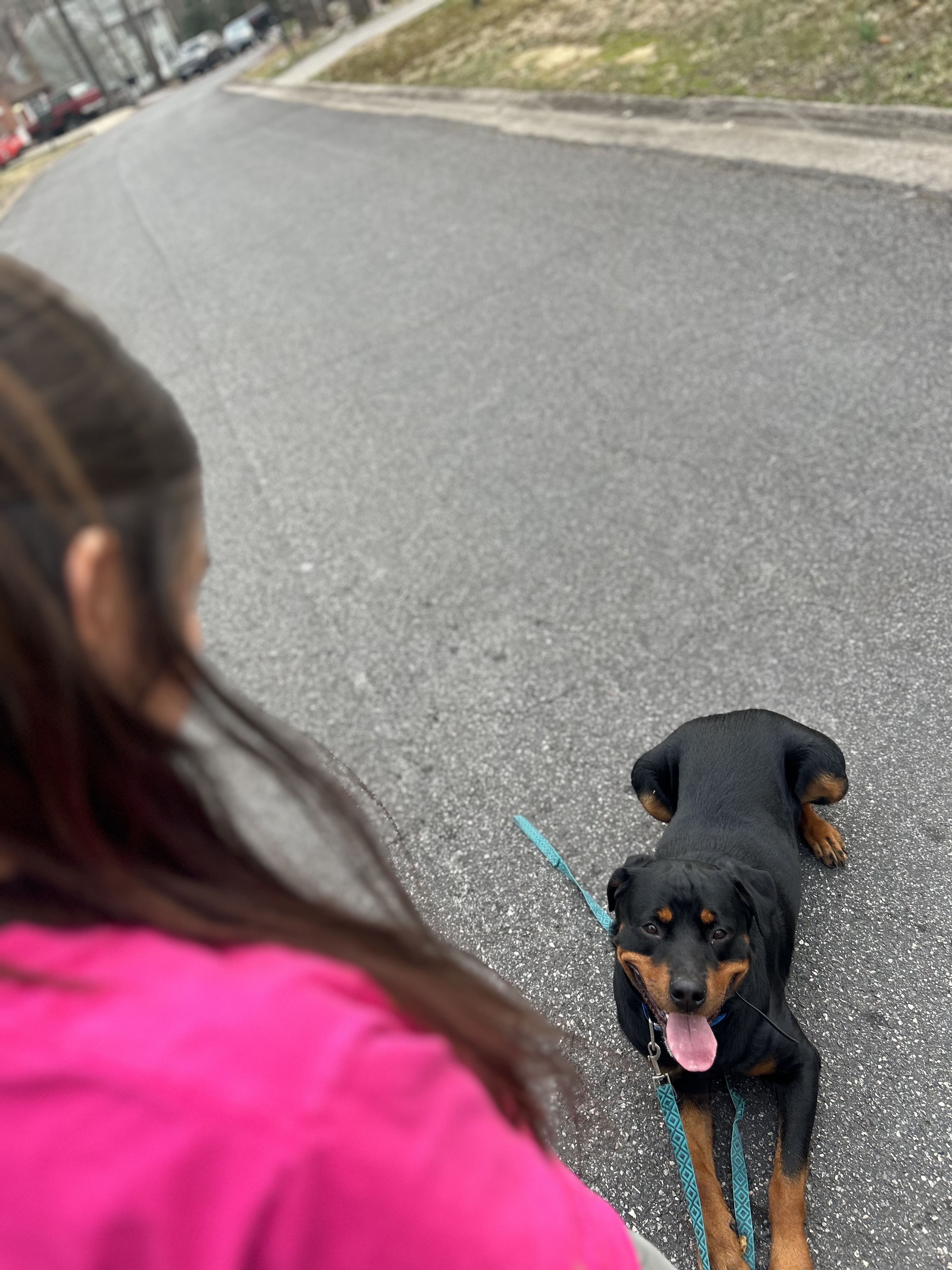
Dog training at Black Ice Working Dogs
Black Ice · Richmond, VA

What We Address

We work with the full spectrum — from mild anxiety to serious aggression. If the behavior is creating risk or stress in your household, it's worth a conversation.

01
High Priority
Human Aggression

Directed aggression toward strangers, family members, or specific types of people. Among the most serious cases we take on — and the most important to address correctly.

  • Growling, snapping, or biting people
  • Stiff body, hard stare, raised hackles
  • Lunging toward unfamiliar people
  • Guarding family members aggressively
02
High Priority
Dog Aggression

On-leash or off-leash aggression toward other dogs, including fights in multi-dog households. Can range from selective reactivity to predatory intent.

  • Lunging, barking at dogs on walks
  • Dog fights in the home
  • Inability to be off-leash around other dogs
  • Prey-drive escalation toward smaller dogs
03
Moderate Priority
Leash Reactivity

Over-threshold responses to triggers while on leash — often appearing more dramatic than true aggression, but disruptive, exhausting, and potentially dangerous.

  • Barking, spinning, lunging on leash
  • Calm off-leash, explosive on-leash
  • Threshold-specific triggers (bicycles, joggers)
  • Handler frustration and avoidance of walks
04
Moderate Priority
Separation Anxiety

True separation anxiety is more than nuisance behavior — it's a panic response. Destruction, self-injury, relentless vocalization, and physiological distress when left alone.

  • Destructive behavior when alone
  • Excessive vocalization (barking/howling)
  • House-soiling despite being trained
  • Self-injury attempting to escape confinement
05
Moderate Priority
Resource Guarding

Growling, snapping, or biting to protect food, toys, sleeping spots, or people. Often misunderstood as dominance — actually rooted in insecurity and competition anxiety.

  • Growling when approached at food bowl
  • Snapping when toys are taken away
  • Guarding furniture or sleeping areas
  • Redirected aggression during resource access
06
Common Case
Fear & Anxiety

Generalized anxiety, fear of specific stimuli (sounds, surfaces, people), and phobia responses. Often the hidden driver behind many other behavioral presentations.

  • Cowering, trembling, or hiding
  • Noise phobias (storms, fireworks)
  • Fear of specific objects or environments
  • Shut-down or hypervigilance in public

Every reactive dog is telling you something. Our job is to listen precisely enough to respond correctly — then teach the dog that a different response is possible.

Cedric Jones · Black Ice Working Dogs
01
Root Cause Assessment

We start with a thorough intake evaluation — history, trigger mapping, threshold testing, and observation. No protocol begins until we understand exactly what's driving the behavior.

02
Structured Desensitization

Systematic exposure below threshold, building counter-conditioning where needed. Progress is tracked precisely — we never rush the process, but we never waste time either.

03
Obedience as a Framework

A trained dog has an alternative to react. Clear commands give the dog something to do — and give you control in the moments that matter most.

04
Owner Integration

You are a non-negotiable part of the solution. We train you in parallel — the same way we train your dog. Without handler consistency, no modification holds long-term.

How It Works

Every case is unique. This is the framework every behavior modification client moves through.

01
Case Inquiry

You submit a detailed inquiry including your dog's history, the behaviors you're experiencing, and any prior training attempts. Full transparency is required.

02
Intake Evaluation

An in-person behavioral assessment. We observe your dog, map their triggers, test their threshold, and determine program fit and structure.

03
Custom Protocol

A structured modification plan built around your dog's specific presentation — delivered as a board & train, day training, or intensive hybrid depending on severity.

04
Handler Training

As your dog progresses, you're brought in to learn the protocols, tools, and handling techniques required to maintain and continue the work at home.

05
Ongoing Support

Behavior modification doesn't end at discharge. We provide structured follow-up, answer questions as new scenarios arise, and adjust the plan as your dog progresses.

What Real Progress Looks Like

We believe in setting you up with truth before we take your dog — not with unrealistic guarantees. Here's what clients should understand before beginning.

01
This Takes Time

Behavior modification is not a 2-week fix. Significant cases — especially aggression with a long history — require weeks or months of structured work. Rushing it undermines it.

02
Management Is Part of the Plan

During and after the program, management protocols will be required in certain situations. A dog with a serious bite history may always need structured management in specific contexts. That's not failure — that's reality.

03
Your Dog Can't Do It Alone

The most successful behavior modification cases have one thing in common: owners who do the work after they take their dog home. Consistency, rehearsal, and follow-through are the difference between a dog that maintains and one that regresses.

04
Not Every Case Passes Evaluation

We are selective. If we assess your dog and believe the risk level exceeds what our program can safely address, we'll tell you directly — and help you find the right path forward.

Owner Commitments
What We Ask of You
📋
Full Disclosure

Complete history — every incident, every prior training method, every medication. We can't design an effective protocol without the full picture.

🔄
Protocol Consistency

The instructions you receive after handler sessions must be applied exactly and consistently. Inconsistency is the primary reason behavior programs fail.

📞
Ongoing Communication

You report changes — good or bad — as they happen. If a new trigger emerges or something regresses, we need to know immediately to adjust the plan.

Realistic Timeline

You enter this program understanding that significant behavior change takes weeks or months, not days. We will work as efficiently as possible — but we will not cut corners.

If you're committed to this process, we are committed to you. We stay in your corner long after the formal program ends. That's the Black Ice standard.

Client Results

Cases Transformed

★★★★★

Our GSD went from uncontrollable aggression toward strangers to a dog we actually trust around our kids. Cedric didn't just train our dog — he changed our whole relationship with him. I didn't think it was fixable.

MT
Marcus T.
GSD · Human Aggression Case
★★★★★

We had tried two other trainers before Black Ice and neither made a dent. My Malinois had been reactive to other dogs since she was 18 months old. Six weeks later, she walks past dogs without so much as a glance. It's a different dog.

LK
Lauren K.
Belgian Malinois · Dog Reactivity
★★★★★

The handler sessions were what made the difference for us. We learned how to read our dog, how to redirect before he escalated, and how to hold the structure at home. Three months out and everything is holding. Best investment we've made.

PD
Paul & Diana R.
Dutch Shepherd · Resource Guarding

Straight Answers

The questions we hear most — answered honestly.

My dog has bitten someone. Will you still work with us?
+
Yes — bite history alone does not disqualify a dog. We evaluate the context, severity, and pattern of the bite to determine risk and program fit. What matters most is full transparency. If you withhold incident history and we discover it later, the program ends. We need the truth to do the work safely and effectively.
Can behavior modification "cure" aggression permanently?
+
The word "cure" sets the wrong expectation. For most dogs, behavior modification produces dramatic, lasting improvement — sometimes near-complete resolution of the problem behavior. For dogs with serious bite history or genetic predisposition, the goal is reliable management and significant threshold expansion, not a guarantee the behavior can never reoccur. We'll be direct with you during the intake about what a realistic outcome looks like for your specific dog.
Is this delivered as board & train or private sessions?
+
Delivery format depends on the severity and type of the case. Serious aggression cases (human aggression, inter-dog fighting) are typically addressed through our board & train structure, where daily immersive work produces faster and more reliable results. Anxiety and reactivity cases may be appropriate for a hybrid model that includes day training sessions with ongoing owner coaching. We determine the format after the intake evaluation.
What tools do you use for behavior modification?
+
We use the most effective tools for the specific case — which may include flat collars, slip leads, prong collars, e-collars, long lines, and marker-based reinforcement. We are not ideologically committed to a single approach. What we are committed to is what works for the individual dog without creating additional trauma. Every tool we use will be explained to you and demonstrated before your dog goes home wearing it.
How long does behavior modification take?
+
It depends entirely on the behavior, its history, and your dog's genetics and temperament. Leash reactivity with no bite history may see significant improvement in 3–4 weeks. Human aggression with a bite history may require 6–8 weeks of board & train plus months of owner-maintained follow-up protocol. We give you a realistic timeline during intake — and we don't start the clock until we know what we're working with.
What if my dog doesn't respond or regresses after going home?
+
Regression is almost always a function of handler inconsistency or a new, unaddressed trigger — not a failure of the training itself. Our follow-up support is specifically designed to catch and address this. If you report a regression, we diagnose the cause and adjust. We don't disappear after your dog goes home — that relationship continues as long as you need it.
Every Case Starts With a Conversation

Don't Wait Until
It Escalates

Behavior problems don't resolve on their own. The earlier you address it, the better the outcome — for your dog, your family, and everyone around you.

Start the Process Call 804-475-3260

Tell Us About Your Dog

The more detail you give us, the better we can prepare. We respond to every inquiry personally — usually within 24 hours.

Please be thorough — the more detail you provide, the better we can prepare for your intake evaluation.